Sunday, January 27, 2008

Rethinking Unresolved Issues II

Ajax went to his doom, his ire toward Odysseus unquenched and issues unresolved. Death appears indiscriminate at times, not caring whether a person has made peace with others in his or her life. Death takes those who are in harmony with others and also those who are not. A student might be angry with a person for dying. The goblins that can plague a teen who has experienced a death under these circumstances are known as Bitterness and Resentment.

This can be particularly difficult in cases of suicide or drug overdose—situations that could have been avoided. But whatever the circumstances, the question remains, Can the living make peace with the dead?

Labels: , , , , ,

Sunday, January 20, 2008

Rethinking Unresolved Issues

As Odysseus encountered the ghosts of great and mighty figures throughout history, one stood out as aloof and bitter. It was the red and skeletal ghost of a former comrade at Troy, the powerful Ajax. This ghost scowled at Odysseus and cursed him. Following the death of Achilles, there had been a dispute among the Greek commanders as to who should rightfully inherit his armor. Ajax had laid claim to the armor, but Odysseus challenged him. The matter was settled, and Ajax was denied the armor of Achilles. In a furious rage, Ajax took his own life, knowing that he could never possess the raiment of the mighty Greek hero.

How does bitterness and resentment creep into our lives? What can we do about it?

Labels: , , ,

Sunday, January 06, 2008

Rethinking Life After Death

Life Continues

As the ghosts in Hades presented themselves to Odysseus, one in particular stood out from the rest. It was his mother, Anticlea. There, in the land of the dead, Odysseus finally realized that he had been absent from his family’s life for nearly fifteen years. The grief gripped him in a powerful way. He inquired of his mother the condition of his home in Ithaca and of his wife and son. He had a strong desire to know how his father was faring and the manner of his mother’s death. As his mother relayed the news from home, the Greek king fell into agony, understanding that to his family he was thought dead and that he had missed out on much of life.

When we stop to visit the graves of the loved ones that have passed on before us, it is difficult not to consider the living we have done since their passing. Births, graduations, marriages, and other major life events come and go, with the deceased individual apparently missing it all. This can provoke very powerful feelings of sorrow in those who are still here. It is no different for adolescents who lose someone special.

A student who loses a beloved grandmother, for instance, might have a difficult time around holidays, knowing that life’s customs and traditions are taking place without her presence. Another, experiencing the death of a close friend, may struggle with feelings of grief or guilt after winning an important basketball game. A teen whose mother has died could experience serious emotional pain during her senior prom, knowing that her mother would have loved to see the color and style of her prom dress. The dragon that stalks all these students, constantly struggling with the things they know their loved one is missing, is known as Despair.

How can we work with students who are grieving because they have come to the realization that their lives are continuing without the presence of someone they loved? What can make a difference in their lives?

One of the most crucial things we can do is to pay attention to the student who has lost someone special. Watch their behavior and interaction with other students, especially around times of the year and during events that may have been significant to the one that died. Does the student seem sad or cry easily? Is he unusually irritable or angry toward his friends? Do you notice that he is quiet, almost trying to disappear? These can all be clues as to the inner conflicts of the heart.

If you should happen to become aware of such changes in behavior or attitude, address it as soon as possible. Be a listening ear if students are comfortable discussing their struggles with you. Sometimes simply talking about the feelings one is experiencing can be very cathartic.

Art therapy works well in grieving situations, as well. Try having a student draw the things they wish the person who died could have experienced. Writing a letter to the deceased, describing what they have missed, can be very freeing to the young person who is grieving. Letters or artwork can be placed at the gravesite or similar memorial. Be creative. Try to empathize with the adolescent—put yourself in their shoes. The dragon of Despair would want a young heart to wrestle with these issues alone and in isolation. This beast can be slain by affording students an opportunity to share their pain with others, thus ultimately freeing the spirit to begin living again.

Odysseus, still in Hades, met his old ally Achilles, the mightiest of the Greek warriors. The hero, now a resident of the underworld, asked Odysseus for news of his family and whether or not his name was still remembered in the lands of Greece. Odysseus could not supply him with this information, but he was able to tell the ghost the tale of his son, Neoptolemus, and his heroic endeavors on the field of battle. Upon hearing this news, the great Achilles swelled with pride and went off along a meadow, now at peace.

Labels: , , , , , , , ,

Saturday, December 29, 2007

Rethinking Fears

Fearing for Loved Ones

The mighty prophet Teiresias at last revealed himself to Odysseus and drank his fill of the spilled blood. The prophet provided his counsel, cautioning that Poseidon’s anger had yet to be assuaged. He predicted that Odysseus would lose the whole of his crew, along with his ship, to the terrors of the sea and would return alone to shores of Ithaca. There, Teiresias declared, he would realize that the men of Ithaca who wanted to marry his wife Penelope had overrun his home, devoured all sustenance, and abused his son. Hearing this declaration by the sightless oracle, Odysseus was awash with fear—the fear of losing those he held most dear to his heart.
Fear and Dread are the ogres that often haunt the steps of the adolescent who becomes brutally aware of the mortality of loved ones. Those who care about students such as these must learn to smite such foes. They are enemies who would attempt to ensnare a life that could be lived in freedom.

When disaster strikes someone close to us, it is natural to feel worried about others that we love. The sudden realization that all human beings are mortal can be very unnerving for a young person. Thoughts such as “Will my mother die?” or “Will my brother be hurt?” can cross an adolescent’s mind with startling frequency. A student affected by another’s death may appear to be fine on the outside, but inside they are often grieving. They are fearful of experiencing this type of loss again in perhaps an even more personal and devastating way.

If you suspect that a young person is struggling with fears such as this, it is helpful to arrange for a private meeting. There, in an environment of caring and confidentiality, the student can share what is really on his mind. Allow the student to share with little input from you. Simply listen. Sometimes the best thing we can do for a young person in this situation is to be a listening ear.

If she is reluctant to divulge her thoughts concerning her fears and worries about the future, you may want to ask her to write her concerns on a piece of paper or in a journal. This is another grounding technique that allows an individual to take an abstract and thus powerful fear and make it concrete and tangible. Writing reduces intangible fears to something that is manageable. The student can look at the list and say, “So this is what I’m afraid of.” The rational mind is allowed to intervene and determine if the fears are worth having or if they are in fact irrational. A piece of paper and a pencil seem innocuous, but they are in reality very strong weapons against Fear and Dread. The pen is mightier than the sword. It is true that we will all lose those we love, but a life lived in fear of such loss is no life at all.

Labels: , , , , , ,

Wednesday, December 05, 2007

Rethinking What Might Have Been

The first ghost that appeared to Odysseus was that of one of his own sailors, Elpenor, who had died when he fell off the roof of Circe’s palace. He spoke regretfully of the drunken state that had caused him to stumble and fall to his doom. Elpenor entreated Odysseus to give him a proper burial lest his spirit torment the king’s days and haunt his steps. Odysseus swore an oath to provide a suitable wake for his fallen comrade.

If we think about Elpenor’s words, we see that his ghost was full of regret over what might have been. When someone dies in their own world, especially a classmate, it is very common for young people to feel great sorrow and regret over the opportunities they missed to interact with the deceased. These thoughts and emotions can swirl around inside a student and preoccupy their waking hours. The goblins with which we as adult leaders must do battle are known as Regret and Depression.
One of the best ways to help a student in this situation is to give him the opportunity to share his thoughts and feelings, either in a group of his similarly grieving peers or one-on-one with an adult leader. If not given the chance to be freely expressed, these emotions and thoughts can reach a boiling point and cause some serious problems in a young person’s life. Sharing in this manner allows a student the chance to give substance to his feelings and to put words to otherwise amorphous laments and sorrows. Steps should be taken to ascertain who the close friends of the deceased were so that the group can freely share personal memories and stories. These are some ways in which we can help students to slay the monster Regret.

Depression can be defeated through encouraging a grieving student to make forward progress. Suggest new activities in which the young person can become involved. Motivate the student’s friends to come around her during this time. Service projects can be an excellent way to move the student who is sinking into the mire of depression to look beyond her own struggles and toward meeting the needs of others.
What in your life do you regret doing? What do you regret not doing? What changes can you make right now so that you can live your life without regrets?

Labels: , , , , , , , ,

Thursday, November 29, 2007

Rethinking Blood

The Kingdom of the Dead

Odysseus knew that finding his way back home to Ithaca after leaving the island of Circe the sorceress would be impossible without special guidance. The enchantress advised him to seek out the counsel of the blind prophet Teiresias. There was one small problem, however. Teiresias had died some time ago and now dwelled in Hades, the kingdom of the dead. Upon hearing these words, the Greek king was filled with dread and trepidation. He knew that his destiny lay along a path that would take him through the underworld and death itself. Nevertheless, with great courage and emboldened by the desire to return to his kingdom of Ithaca, Odysseus commanded his crew to follow the directions given by Circe.
For days on end they sailed, until the sea itself seemed to flow in an unnatural slope. Darkness filled the horizon as the terrified sailors journeyed toward the growing gloom of Hades.
When the ship neared the lands of the dead, the winds ceased, but the sail still billowed. The sailors next saw dark meadows with black sheep grazing on black grass. Believing that the ghosts of men could be attracted by blood, the Greeks seized two sheep and quickly killed them, draining their blood into a trench in hopes of summoning the phantom of Teiresias. However, a host of specters surrounded them, each wanting to drink of the warm blood that flowed in the trench. There at the edge of the trench, Odysseus communicated with not only the blind prophet but several other spirits as well.
In ancient times, the color red (associated with blood) symbolized the magical power of being alive. Why do you think the ghosts were drawn by the blood in the trench? What were they really seeking?

Labels: , , , ,

Tuesday, October 02, 2007

Rethinking Resistance

Teaching Resistance
Often when we warn students of the dangers of partaking in certain activities, it goes in one ear and out the other. Even worse, it sometimes adds the element of intrigue, of something forbidden. It is important to discuss the dangers of succumbing to temptation, but we ought to go further. The reasons they are being tempted should be explored. They should be made aware that resisting temptation could reveal critical secrets about the inner landscape of their hearts.

How did Odysseus endure the temptation of the Sirens? He planned his resistance even before the temptation presented itself. He knew his own weaknesses and understood his fallibility. Thus, Odysseus ordered his men to bind him securely to the mast of his ship. Furthermore, he demonstrated wisdom by preparing a secondary line of defense against the allure of the Sirens’ song—he ordered two of his strongest men to guard him lest he break his bonds in passionate fury and throw himself over the side of the ship into the treacherous waters below.

What does being “bound to the mast” mean for our students today? The Greek king ordered himself bound to the mast to head off temptation before it could wield its power. Temptation is much easier to defeat prior to the exertion of its magnetic pull. How can adolescents in our day and age bind themselves to the masts of their ships?
Resisting temptation may mean making a commitment to avoid situations where the individual would encounter the thing that tempts them. In this case, it would require a young person to take a personal inventory and acknowledge their areas of weakness when it comes to temptation. Perhaps a young person can recognize that he has a propensity to sell out his true friends when the opportunity to “hang” with the popular crowd presents itself.
In this case, he must identify the settings in which he feels tempted to betray his real friendships in order to acquire popularity and make a commitment to stay away from them. Maybe there is a student who finds herself tempted to drink or take drugs. If this typically happens whenever she is at an unsupervised party, she will most likely need to make a resolution to stay away from the party scene. Finally, if an adolescent finds himself lured into sexual activity, it is undoubtedly due to a combination of factors, such as being alone with his significant other and possibly spending time around others that brag about various exploits. Such a student would do well to distance himself from these things, thus muting the song of the Sirens.
The Old Testament records the story of Joseph and Potipher’s wife. When Joseph was working as a servant at Potipher’s house, the wife of his Egyptian master attempted to seduce him. Instead of trying to summon the strength to resist her advances, Joseph simply fled the predicament, hence avoiding a problematic situation before the temptation became too strong. Further, Joseph protected his personal integrity, his character, and ultimately his heart. As adult leaders, we must understand that this is easier said than done for the students we work with, but it is really the only effective strategy for countering temptation.
Strength in Numbers
Odysseus didn’t try to overcome the lure of the Sirens on his own. Rather he called upon two of the strongest members of his crew to help him stay in control. Students too will need to rely on others who can help them stay away from situations in which they are tempted to do something destructive. Have the adolescents in your sphere of influence identify two or more friends that can be trusted to help them avoid admitted areas of weakness or to encourage them to stand up under it.
The book of Proverbs declares that a “cord of three strands is not easily broken.” Legend has it that prior to his conquests, Genghis Khan’s mother asked him to break an arrow in half with his hands. He did so with great ease. She then handed him three arrows and asked him to do the same. Unable to snap the three arrows, Genghis Khan understood the meaning of his mother’s exercise. There is strength in numbers!

Labels: , , , , , , ,

Saturday, August 25, 2007

Rethinking Sirens

After fleeing the terror of Cyclops Island, The Odyssey’s Greeks landed on a mysterious island that was ruled by the enchantress Circe. There they experienced trouble after trouble, and Circe turned the crewmen into pigs. The clever Odysseus, however, along with the god Hermes, devised a plan to rescue his men from the enchantment of the sorceress. After gaining freedom for his men, the king of Ithaca learned of another peril that he and his crew must at all cost avoid: the Sirens who inhabited a rocky islet that lay along their intended route. Sailors had been tempted to their doom by the alluring chorus of the Sirens, wrecking their ships upon the huge rocks. Their bones were piled high on the peak of the islet.


Odysseus warned his men to beware of the enchanted song and ordered them to put beeswax in their ears so they wouldn’t be enticed by the sweet harmonies of the Sirens as they sailed quickly past the rocky crags. Since he needed all of his senses in order to captain the ship, Odysseus ordered his men to bind him tightly to the mast so he wouldn’t become enchanted and steer the craft into the treacherous shallows or dive into the turbulent waters. Further, he ordered two of his strongest men, Perimedes and Eurylochus, to guard him closely in case he was able to break his bonds.

Because the sail could not be used in such a narrow pass, the Greeks rowed their vessel along the jagged coast. Without fail, the Sirens began their bewitching ballad. The sailors, their ears stuffed with wax, were immune to the singing of the Sirens, but Odysseus pressed and strained against his bonds. The Sirens sang mystical tunes that entreated the Greek king to think about the green hillsides of Ithaca, the warm embrace of his wife, and his longing for knowledge about the mysteries of the world.

Mad with desire, Odysseus broke the sinews that bound him to the mast and rushed to the edge of the ship. Fortunately, Perimedes, Eurylochus, and the rest of his unaffected crewmates were able to restrain the impassioned king in his crazed attempt to swim to the Sirens. As the ship passed the Sirens, Odysseus was finally able to gaze upon the creatures that had lured him with their silvery sweet voices. To his shock and dismay, the beings that so melodically aroused him into a torrid rush revealed themselves to be hideous beyond human comprehension. Each had the ugly, grasping claws of an osprey, winged bodies, and the heads of young women. They sat aloft a pile of human bones, some with the flesh still hanging off them. The disgust and loathing he felt when he looked upon the Sirens and the sudden realization of what they really were shattered the euphoric spell and freed Odysseus to continue on his long voyage home to Ithaca.

Labels: , ,

Tuesday, August 21, 2007

Rethinking Temptation

Now the serpent was more crafty than any of the wild animals the Lord God had made. He said to the woman, “Did God really say, ‘You must not eat from any tree in the garden’?” —Genesis 3:1

Why comes temptation, but for man to meet and master and crouch beneath his foot, and so be pedestaled in triumph? —Robert Browning

Adolescents today face an ever growing array of temptation. Succumbing to these temptations can distract and derail a young person’s journey through life. Sometimes the consequences of falling into temptation last well into adulthood and affect future generations. We will use the rendezvous between Odysseus and the Sirens as a metaphor for understanding the issue of temptation and the hazards of yielding to it.

Labels: , ,

Wednesday, July 25, 2007

Rethinking Bullying VIII

Sword to the Eye

When Polyphemus was fast asleep, the wise Odysseus knew that the effects of the wine would soon wear off, and he and his men would again find themselves in mortal danger. Realizing this, the king knew that drastic measures needed to be taken. He heated his sword in the fire pit until the blade was red hot. Then, while his men restrained the Cyclops, Odysseus thrust the glowing blade deep into the epicenter of the monster’s hideous strength, his single eye. Blinded and in agony, the Cyclops rolled the enormous stone away from the mouth of the cave to call for help, allowing the Greek soldiers to escape.

The behavior of a bully can lead a victim to feel powerlessness. This feeling can have a deteriorating effect on the heart, leading to despair and hopelessness. The Old Testament story of David and Goliath describes the Philistine giant Goliath taunting the armies of Israel for days on end. The Israelite soldiers and even their king Saul felt more and more defeated and fearful the longer this was allowed to continue. Fear and despair, this is what we are fighting against. Encourage the victim to be assertive in bullying situations, just as the young David stepped in to face his huge opponent.

What does assertiveness look like? It depends upon the student who is being bullied. If a student is being bullied in a school cafeteria every time he passes by a certain lunch table, he may be tempted to tiptoe quickly and quietly past the table while looking down at the ground so as to not draw unwanted attention. A protective response like this may seem natural, but over time it wears away a person’s sense of worth and serves to make the person feel even more powerless. It is a good exercise to identify one’s fears. An adult leader in circumstances such as these would want to help this student to identify his fears and put words to them.

Keep in mind that this usually can only happen within the framework of a previously established relationship and sense of trust between adult and student. Putting words to our fears has the same effect as shining a light in a darkened room. It is a grounding technique, one that allows the student to take her fears from being something amorphous (which enables fears to last and linger far longer than they otherwise could) to something that is concrete and definable.

Let’s say that this young lady walks meekly past a threatening situation because she is afraid that another student, or students, will say something disparaging toward her if she is noticed. In this case, assertiveness for her might be allowing herself to be noticed. She should speak up and walk proudly, with her head held high. She ought to make eye contact with those who have been harassing her. If a bully bothers her, she should loudly and firmly tell the person to stop what they are doing. Bullies rarely like to have their actions broadcast to everyone else. She may not feel that self-confident, but feelings follow actions.

Metaphorically, the Cyclops cave represents a prison of fear, and the sword of Odysseus symbolizes assertiveness, which is the key to being released from the cave. For the Israelites, freedom from Goliath’s intimidation and fear came at the hands of a young boy armed with only a sling and a stone. In Tolkien’s The Hobbit, the people of Lake Town were liberated from the terror of the dragon Smaug through the courage of Bard and the swiftness of his Black Arrow. Act the way you want to feel until you actually feel that way. Don’t let the bullies win!

This next assertion will probably ruffle some feathers, but some feathers need to be ruffled. There may be some circumstances where a young person may need to physically defend himself against a bully. This is especially true for adolescent boys. I think back to my tenth-grade boys’ gym class. Mr. Auberon, our teacher, introduced us to a number of different athletic activities such as baseball, basketball, archery, golf, tennis, and volleyball. One day he announced that he would be breaking the class up into pairs so that we could learn some wrestling moves. I remember some of the students in the class grumbling rather audibly when Mr. Auberon made the announcement, but even more I remember his reply to their protests. He said, “You never know what kind of situation you might find yourself in someday, and a man needs to know that he can take care of himself.” This is truer than many in our society want to believe. Like it or not, boys (and men) need to know that they are able to handle themselves if the going gets rough.

A student who is being bullied will want to identify his fears and be assertive, but he will also want to know that he can defend himself if he is physically assaulted. An adult leader in this case may want to encourage some form of self-defense training, martial arts, or perhaps trying out for the wrestling team. It may even be as simple as an adult leader teaching the student a few wrestling moves or how to throw or dodge a punch.

There are probably some that are ready to close the browser window, thinking that this is a call to violence. However, it is anything but a physical call to arms. Instead, we want to teach someone—or arrange for someone to be taught—how to defend himself so that hopefully they will never have to do so.

Mr. Miyagi draws the truth out of his protégé Daniel LaRusso by asking, “Daniel-san, why do you study Karate?” Daniel replies, “So I can fight.” Miyagi looks deep into Daniel’s eyes and says, “Is that what you think?” “No,” Daniel replies, and then after a pause continues, “So I won’t have to fight!” Miyagi smiles.

The battle is not in the physical realm. It is a contest for the heart. This suggestion is no doubt an investment of time and energy, but it is an investment that will pay lifelong dividends.

Labels: , , , , , , , ,

Tuesday, June 19, 2007

Rethinking Sarah

Female Bullying: The Story of Sarah

Female bullying looks different from male bullying in that it is primarily verbal and emotional. This isn’t to say that female bullying can’t become physical, as it occasionally does. Let’s take a look at Sarah’s situation to gain a better understanding of female-on-female bullying.

Sarah had grown up in the school district she currently attended. Through elementary and now middle school, she had spent most of her time with a group of about six or seven girlfriends. In the middle of her eighth-grade year, things became a little rocky with one of the girls in her group, Tina, who was arguably the leader. One day at the lunch table, Sarah mentioned that she thought a certain boy, Travis, was a "hottie." Unbeknownst to Sarah, Travis was currently being pursued by Tina. Tina reacted by calling Sarah a "slut." This led to considerable awkwardness, and Sarah, who tried to avoid confrontation, didn’t respond and fell silent.

Over the next few weeks, things began to get worse and worse. Sarah returned from her gym class to find the word "Ho!" scrawled in pencil on the door of her locker. She quickly tried to erase the word before anyone else saw it, but some around her noticed. The atmosphere at the lunch table was becoming more and more tense as Tina continually taunted Sarah, referring to
her as a "bitch" and "whore." Some of the other girls at the table began to give Sarah the cold shoulder, more in an attempt to stay in the good graces of the dominant Tina

The next day, a group of girls from another clique came up to Sarah’s locker in the morning before homeroom. They snickered and laughed. "What’s the matter?" Sarah queried. "So . . . how was it?" one of the girls replied. "How was what?" Sarah said. "Well, Tina told everyone on MySpace last night that you had sex with some kid." Sarah felt the tears of frustration seep into her eyes; she couldn’t help it. She ran away crying, which only fueled the poisonous gossip and rumors that Tina had spread.

That night she locked herself in her room. Sarah’s mother knew that something was terribly wrong, but was unable to pry any information from her daughter as to what it might be. How could Sarah tell her mother? Imagine the embarrassment! She, too, felt like Odysseus, trapped in the Cyclops cave. Her crew was being eaten one by one and the situation was looking ever grimmer.

Labels: , , , , , , , ,

Sunday, June 03, 2007

Rethinking Giants II

Most people have never come face to face with a flesh-eating, one-eyed mythological monstrosity like Polyphemus, but many young people have encountered a giant just as menacing. For a moment, look at bullying again through the eyes of someone who is currently facing it, and you will come to understand that bullying is a monster just as fearsome as the Cyclops of Homeric epic. Bullying strikes at the heart and soul of the adolescent, with a terrible brutality.

Labels: , , , , , , , , , , ,

Wednesday, May 30, 2007

Rethinking the Cyclops Cave

The Greek sailors who ventured with Odysseus had trusted their commander through thick and thin, through the tortuous years of the Trojan War and beyond. However, nothing could have prepared them for the terror they were about to endure on one ominous island that awaited the landing of their ships. Odysseus had already rescued his men from the perils of the lotus fruit and the narcotic apathy that it offered. Still coming down from the high of the intoxicating plant, the crew grumbled mightily. They argued that Odysseus should have left them to their peace and not dragged them back to sea. They were hungry and feeling mutinous. Odysseus, though not wanting to land on any of the nearby islands, was forced into a position where he had to make landfall or face the consequences of an increasingly unhappy crew. In the foggy blue of the Aegean Sea, a rocky island appeared slowly from the mist. Odysseus and a small company of his men set out to explore the island, searching for food and supplies.

Not long after setting foot on the mountainous island, one of the men spotted what appeared to be a herd of sheep moving across a rocky outcropping. The men ran after this wandering meal with the fervor brought on by intense hunger. Unfortunately for Odysseus, something else watched his men from the shadows of a high cave, waiting with an even more insatiable appetite for the meal that was running his way.

The Greeks pursued the sheep up the rocky clefts in the mountain until they came to a great cave. Hearing the bleating of the sheep from within the vast cavern, the men cautiously entered. As their eyes adjusted to the gloom and darkness, they saw a fire pit with great spits that roasted several goats. The aroma drifting from the open pit was too much for the men to take! They sprinted inside the cave and began stuffing their mouths with the succulent meat and sizzling fat. The feeling that they were but mice in a horrible trap, however, plagued Odysseus.

Without warning, an enormous stone was rolled in front of the entrance to the cave, plunging the Greeks into thick darkness. Only the fire pit cast an orange glow on the walls of the cave, making shadows dance like fearful demons. Then from the darkness emerged a sight so abhorrent and terrible that it reduced the brave Hellenic fighters to yelping children. A huge, monstrous, humanlike figure with gleaming teeth and one huge eye in the middle of its forehead stepped into the center of the cave. A massive hand reached down and lifted two of the sailors into the air with ease and stuffed them into the giant’s crushing mouth. The screaming men were eaten alive, bones and all! Growling and snarling, the monster reveled in the sheer ter ror he generated. The rest of the crew cowered in utter fear before the giant Cyclops.

Odysseus, his nimble mind always scheming, decided to entreat the monster. He called out to the Cyclops, drawing the fearsome giant into a conversation. Odysseus asked for the monster’s name. The Cyclops responded that his name was Polyphemus, and said that he and his brothers owned this island that the Greeks had stumbled upon. At that moment, he reached down and laid hold of another terrified sailor.

Determined not to lose any more of his men to this colossal horror, Odysseus intervened. Bernard Evslin provides an admirable paraphrase of this intercession in The Adventures of Ulysses. “Wait!” he cried. “Why?” asked the Cyclops. “Well,” the king responded, “that man you are about to eat was raised on olives and has an oily taste. You will not enjoy him without the taste of wine.” Confused, Polyphemus retorted that he was not familiar with “wine.” Odysseus continued, “Wine! It is the drink of the gods. Here, it is my gift to you.” With that, Odysseus handed the giant a substantial flask of the cordial. As the giant drank the wine, he asked Odysseus for his name. The clever king of Ithaca responded, “My name . . . is nobody.” “Well Nobody, “replied Polyphemus. “I like you. Therefore, I will eat you last.” As the Cyclops imbibed more and more wine, he became sleepier and sleepier, until finally the great body collapsed upon the cave floor and the sounds of mighty snoring ensued.
Odysseus commanded his sniveling men to go to either side of the giant’s mighty head. The king set the blade of his sword in the embers of the fire until it turned red hot. He then ordered his men to hold tightly to the huge ears of the sleeping giant to steady his head. With one powerful move, Odysseus plunged the glowing blade deep into the Cyclops lone eye! Awakened by the blow, Polyphemus wailed and thrashed about in agony. The Greeks hid among the sheep of the cave in a desperate attempt to avoid the reach of the now blinded monster. As suddenly as the wailing and groaning of the Cyclops began, it stopped, leaving the cave in deafening silence. The Greeks, hidden among the sheep, held their breath, as the giant listened quietly for the sounds that might lead him to the men who had left him so impaired.

Hearing only the bleating of the sheep, Polyphemus rolled the huge boulder away from the cave entrance, knowing that the sheep would instinctively exit the cave, leaving behind the men for whom his great wrath was now burning ferociously. Understanding the giant’s plan, Odysseus quietly ordered his men to cling to the bellies of the sheep as they left the cave, allowing them to flee undetected from the presence of the Cyclops. Looking back as he ran to freedom, Odysseus noticed several other tremendous figures converging on the cave, obviously the other Cyclopes, drawn by the bellowing of their wounded brother. “Who did it?” the other giants roared. “Who has blinded you?” Still in considerable agony, Polyphemus replied, “Nobody has blinded me!” “So you have done it yourself?” the others said. “What a terrible accident!”

Labels: , , , , , , , ,

Sunday, May 27, 2007

Rethinking Giants

No passion so effectually robs the mind of all its powers of acting and reasoning as fear.—Edmund Burke

Fear is the main source of superstition, and one of the main sources of cruelty. To conquer fear is the beginning of wisdom.—Bertrand Russell

I’ve grown certain that the root of all fear is that we’ve been forced to deny who we are.—Frances Moore Lappe

Most adolescents have experienced or are currently struggling with the problem of bullying. Bullying is when someone performs certain actions or says certain things to harass or exert power over another. It is about the domination of other souls. Schoolyard bullying has plagued every generation, and most adults have traditionally viewed it as a right of passage, telling the young to simply ignore the bully and he will eventually go away. But bullying can leave scars on hearts that last a lifetime. Over the next few weeks, this blog will address the issue of bullying by exploring Odysseus’s encounter with the horrific Cyclops.

Labels: , , , , , , , , ,

Monday, May 21, 2007

Rethinking Intervention II

If a young person you care about becomes involved in a behavior that will ultimately lead to destruction, it would be wise to conduct an intervention. You have the very important opportunity to intercede for the adolescents in your sphere of influence, just as Odysseus stepped into the lives of his crew. What is an intervention? When a person is addicted to their lotus of choice, the other people in her life—siblings, parents, and friends—may be experiencing a wide range of feelings, including anger, guilt, betrayal, fear, or frustration. Maybe things have been tried in the past and have failed. The situation can be chaotic. The goal of an intervention is to focus the siblings, friends, and family into a cohesive group that can introduce change into the destructive cycle of dependence. Most of us can remember when something said or done by someone who was important to us changed our way of thinking and perhaps saved us from a ruinous situation.

The group must have a leader—an Odysseus, so to speak. The leader must make sure that the group has been familiarized with the dysfunction at hand. If the problem is an addiction, treatment options should be investigated. The intervention group should meet prior to the actual intervention for purposes of preparation. What is going to be said to the individual? Who should be involved? Treatment should be arranged ahead of time.

When the time comes for the actual intervention, the leader’s job is to establish a sense of order in the process. Each person in the group gets an opportunity to speak to the person involved and let her know how much she means and how much she is loved. The individual needs to know that her behavior affects everyone in the room and that the problem is no longer hidden. Since treatment has already been arranged, there is no room for debate. Keep the tone loving and full of respect, but be resolute. The person may break down and cry. Perhaps she will become angry. Whatever the reaction, be firm. For the individual and for the group, the problem must be resolved and not allowed to continue.

Interventions of this kind may vary and don’t necessarily hold to a strict set of rules. Sometimes a simple intervention is best, maybe addressing a situation that hasn’t been previously acknowledged or asking a person to stop a behavior that is doing them harm or draining their life energy away. A simple intervention in an addiction to busyness can include requiring a student who is overextended to reduce the number of activities in which they are involved. For a teen that is lost in a fog of video games, television, or the Internet, it may mean taking away the game system, disconnecting the Internet, or removing the television from the bedroom. Regardless of the situation, it is highly recommended that you seek out the advice of a counselor or intervention professional for your particular situation.

Labels: , , , , , , , , , , , ,

Friday, May 18, 2007

Rethinking Intervention

How did Odysseus save his crew from the intoxicating effects of the lotus fruit? What were his options? Did he try to reason with them? Maybe if he had tried to discuss their perilous situation, they would have listened to reason and returned to their ships on their own. What if he attempted to console them? Possibly if he had had pity on his crew and empathized with their situation, they would have been overcome by his understanding and compassion and given up the addictive high of the lotus. Perhaps he might have chosen to feel sorry for them and for the pain that they had endured from their years of battle at Troy and their hazardous journey at sea. The fog of Morpheus could be viewed as merciful, numbing painful memories of the past. If Odysseus had decided to travel any of these roads, he would have ended up enabling the sailors in their own act of self-destruction and ruining any hope he had of ever seeing Ithaca again.

The heroic Odysseus chose a much more intimidating path, a way that would place him in a position of appearing to be the very evil from which he was trying to rescue his men. One by one, the good king dragged his sailors back to the ship against their will. The ship represents a way to freedom, the very thing for which the men were longing. The crew, dizzy from the effects of the lotus, spat and fought against the very person that was carrying them to freedom.

When someone is using a crutch—whether video games, busyness, the Internet, television, chemicals, or anything else—to anesthetize the wounds of their heart, they will resist (sometimes violently) any attempts at distancing them from their particular lotus fruit. Once the lotus fruit is removed, they will find the particular pain they were anesthetizing will usually rise to the surface. But this allows both adult and adolescent to better comprehend the source of the wound and to explore the possibility of healing. If you are a teacher, counselor, or youth worker, you should attempt to work hand in hand with the parents of the adolescent who is self-medicating, whether literally or figuratively. If you are a parent, you will need the support of other adults in your child’s life.

Labels: , , , , , , , , , , , ,

Saturday, April 28, 2007

Rethinking Pain-Killers

Man is an animal which, alone among the animals, refuses to be satisfied by the fulfillment of animal desires. Alexander Graham Bell

Bacchus hath drowned more men than Neptune. Thomas Fuller

Dwell not upon thy weariness, thy strength shall be according to the
measure of thy desire.
Arab proverb

Like Odysseus and his men, adolescents are suffering from painful experiences and memories that seem to cause an unrelenting soul-ache. Do they use this pain to drive them on to real answers and true healing? Sadly, no. Most young people (and adults, as well) attempt to numb the pain they are experiencing. We will next examine how Odysseus’s soldiers endeavored to anesthetize themselves against the suffering they had experienced.

The Lotus-Eaters

Odysseus and his men sailed across the seas in a vain attempt to reach the only home they had ever known. Cursed by the god Poseidon and weary from war and adventure, a fierce storm blew their ship to an island off the coast of Africa. This island had the reputation of being the “land where Morpheus plays.” Morpheus was the Greek god of dreams, the son of Hypnos, the god of sleep, and the nephew of Hades, the god of death and the underworld.

Upon setting foot ashore this strange country, Odysseus and his men crawled upon the sandy beach and fell into a deep sleep. When they awoke, they met a group of people known as the Lotophagi, or “lotus-eaters.” The Lotophagi lived in a drug-induced haze that was the result of eating the narcotic lotus fruit. The inhabitants of this land had little care for the worries and concerns of mortal men and were apathetic toward life. The islanders brought armfuls of the lotus fruit for the crew of Odysseus’s ship. Hungry and hurting from their terrible experiences in war and at sea, the sailors followed the example of the islanders and ate the narcotic fruit.

According to Bernard Evslin’s version of Homer’s Odyssey entitled The Adventures of Ulysses (1969), Morpheus examined the minds of the Greeks as they slept and found anguished memories of warfare and greed. The dream god soothed their sleep with visions of their wives and families and home. As they awoke, they longed to return to the tranquility of their dreams, so they again partook of the lotus fruit and fell into a deeper sleep still.

Sensing that the gods had destined Odysseus for other ends, Morpheus declined to fill the hero’s sleep with intoxicating visions, instead allowing him to dream as he might. Unlike his men, the Greek king experienced frightful nightmares and relived painful memories in a restless and fitful sleep. Rising, he realized that his men had eaten of the lotus fruit and had fallen into a drowsy bliss. Eager to assuage his agony, Odysseus gathered a handful of the enticing fruit and breathed in the inebriating aroma. He knew at once that if he too ate the sweet fruit, his crew would be doomed to spend their days in lethargy and illusion, rather than finally reaching home and family. In an incredible act of the will, Odysseus arose and dragged his entranced men one by one, kicking and screaming, back to the ship and back to reality to continue on their long voyage back to Ithaca.

Labels: , , , , , , , , , , , , ,

Monday, April 16, 2007

Rethinking Awareness IV

How was Odysseus freed from his captivity on Calypso’s island? Keep in mind, Odysseus had fallen into despair, resigning to the fact that he would never again see his cherished homeland of Ithaca. The mighty hero was in a helpless situation. Intervention had to come from outside the island, from Zeus himself. Why did the gods intervene in this situation? Because they heard the cries of Odysseus and decided to once again step into his story.

Be Aware

Just as the gods noticed the tears of Odysseus, we as adult leaders need to be aware of changes in our students’ behavior. Is a normally happy and upbeat girl now depressed and teary-eyed? Is a boy who is normally talkative suddenly quiet? Is an easygoing student becoming touchy and irritable? Granted, there could be many reasons for such a change, but pay attention to who it is they are spending time with.

If you are a teacher or school counselor, spend time in the hallways or the cafeteria. You would be amazed at what you can learn from time spent daily in the hallways between classes or in the cafeteria during lunch. If you are a coach, pay attention to what is discussed in the locker room or on the field. There you will find adolescents at their most unvarnished. Try to notice who students sit with during unstructured time. This may sound sneaky, but listen in on their conversations. Remember that this is a war for the hearts of the young people in our care! This will reveal a great deal about what is happening in their lives and give you clues as to how you can intervene in destructive relationships.

Labels: , , , , , , , , , , , ,

Friday, April 13, 2007

Rethinking Love III

William Shakespeare warns us about the dangers of young “love” in his play Romeo and Juliet. He tells the story of two young people who fall in love in the midst of a war between their families. Romeo is a Montague, while Juliet is a Capulet. They chase each other with a passion, but in the end, their unrelenting infatuation leads to their demise.
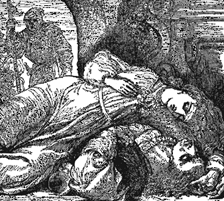
The star-crossed lovers believed that the answers they sought could be found in the other person. When Romeo believed that Juliet had died, he ended his own life. When Juliet awoke from her deathlike sleep, she committed suicide after realizing that Romeo had taken his life. This play is rightly described as a tragedy! How many adolescent suicides, bouts of depression, and insecurities today are related to lost love, and to the perception that the answers to life’s questions and the source of healing have been lost?

Our culture doesn’t help much. Music videos, video games, television, and the Internet all scream sex. Flip through your television channels. Look at the advertising schemes. What is held up as the ultimate meaning of life? Romantic relationships and physical intimacy! Don’t get me wrong, for those who have had relationships like these, they are wonderful things. They are designed to bring people closer together. But to make these things the object of our quest and our reason for living is to set ourselves up for failure and heartache.

We are in a position to help adolescents navigate through these murky relational waters. There are probably some of you who are thinking that you would never be able to advise a student with issues such as these. You may feel that you don’t have your own act together, so you don’t see how can you possibly help someone else. Don’t worry! Having your life in perfect order is not a prerequisite for helping others.

Labels: , , , , , , , , , , , , ,

Tuesday, April 03, 2007

Rethinking Love II

Teenage relationships that are passionate, move fast, and lead to heartache and ruin. Just as Odysseus washed ashore on the island of Calypso, wounded and in pain, many adolescents run to the arms of the opposite sex for solace, a shelter in the midst of life’s storms. In essence, they end up seeking answers to their heart’s deep questions in another person. This is a recipe for disaster.
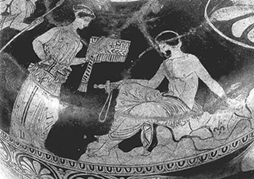
Counselors, teachers, and parents could tell countless tales of young girls who sought their answers from a teenage boy. They give of themselves physically, believing that if they give everything they have, the answers and healing they seek will be found. Usually, they find the opposite instead—more pain and more confusion. The boy will often feel smothered from the weight of the girl’s needs and will run from the situation. The girl will then be devastated by the loss of what she perceived as the quest object of her life and will despair. When you make someone else your life’s goal, you feel destroyed and hopeless if they leave.

The way adolescent boys end up running to girls as their source of healing and life’s answers can look a little different. A teenage boy may become subservient to a girl, catering to her every whim, just as Odysseus was made prisoner to Calypso. The girl may become more demanding and bossy and begin to look down upon her boyfriend for his neediness and lack of courage to stand up to her. This is typically because what drew her to the boy in the first place was his strong, untamed nature. Deep down, she isn’t looking for someone who needs her, she is hoping for someone who wants her. This may appear to be a subtle difference, but it is very significant. She will push and push, actually hoping to prod the boy into standing up to her demands. This may sound odd, but it occurs frequently.

A darker way in which some teenage boys take their quest to their girlfriends is through violence. Searching for healing and answers, a boy will sometimes feel strong anger toward the girl for not providing what his heart is seeking. In situations like these, abuse is common. In a move that seems to defy common sense, the girl, struggling with her own wounds and insecurities, will commonly stay with the abuser. Like Odysseus, these young people end up becoming captives of the very thing they found so alluring in the beginning. As Calypso served only to delay Odysseus’s journey home, so too do unhealthy relationships delay an adolescent’s quest to find the healing and heart-level answers for which they search.

Labels: , , , , , , , , , ,

Academics Blogs - Blog Top Sites