Rethinking Awareness IV
 How was Odysseus freed from his captivity on Calypso’s island? Keep in mind, Odysseus had fallen into despair, resigning to the fact that he would never again see his cherished homeland of Ithaca. The mighty hero was in a helpless situation. Intervention had to come from outside the island, from Zeus himself. Why did the gods intervene in this situation? Because they heard the cries of Odysseus and decided to once again step into his story.
Be Aware
 Just as the gods noticed the tears of Odysseus, we as adult leaders need to be aware of changes in our students’ behavior. Is a normally happy and upbeat girl now depressed and teary-eyed? Is a boy who is normally talkative suddenly quiet? Is an easygoing student becoming touchy and irritable? Granted, there could be many reasons for such a change, but pay attention to who it is they are spending time with.
 If you are a teacher or school counselor, spend time in the hallways or the cafeteria. You would be amazed at what you can learn from time spent daily in the hallways between classes or in the cafeteria during lunch. If you are a coach, pay attention to what is discussed in the locker room or on the field. There you will find adolescents at their most unvarnished. Try to notice who students sit with during unstructured time. This may sound sneaky, but listen in on their conversations. Remember that this is a war for the hearts of the young people in our care! This will reveal a great deal about what is happening in their lives and give you clues as to how you can intervene in destructive relationships.
Labels: adolescents, behavior, cafeteria, Calypso, coach, counselor, education, high school, Ithaca, Odysseus, students, teacher, Zeus
posted by Jay D'Ambrosio at 11:29 AM
0 comments

 Odysseus, drifting in an endless sea of despair, washed ashore on an unknown island. All he understood was that his face was against the rough, grainy sand of a beach, and that he was for the moment safe from Poseidon’s apparently unyielding wrath. His vision skewed due to lack of sleep and his taxing ordeal, he came upon a shimmering apparition. He asked this strange being where he had landed. With voice enticing, she assured him that he was now home. Feeling the hope arise in his heart, the hero supposed that he had arrived in Ithaca; however, he was very much mistaken, for he had actually landed on the island of the sea nymph, Calypso.
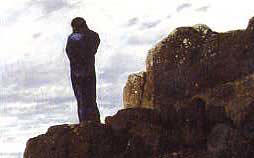 Homer tells us that this intoxicating divinity had fallen in love with the mortal Odysseus. The poet gives us no indication that this love wasn’t the real thing. Calypso passionately loved Odysseus. Nonetheless, he knew that his fate lay along another path. His heart's longing was for his true home and for his family. The sea nymph’s tidal passion for Odysseus caused her to, in essence, imprison him on her island. Being battered and faint from his horrendous trials, the hero collapsed into the loving embrace of Calypso.
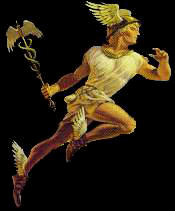 The gods of Olympus heard the cries of the hero-king and, considering his destiny, sent the messenger-god to the island prison. Hermes came to Calypso and relayed the will of Zeus. He declared that Odysseus was to be set free from the bonds of this island and was to be permitted to continue his quest. Embittered by this word from on high, Calypso protested. Finally, Hermes warned the goddess that dire consequences drive her island to the bottom of Poseidon's sea if she insisted on keeping Odysseus captive. Calypso relented at last, and Odysseus was free to journey on!