Rethinking the Lotus II
 Barry was a high school senior who was well liked by his parents, peers, and teachers. He was a solid basketball player and had already been accepted at George Washington University. His life did have its challenges, however. His father, who was respected in the community, had spent precious little time with Barry as he was growing up. He had come up with any number of excuses throughout the years as to why he was unable to take Barry camping or even play catch in the backyard. Intellectually, Barry had grown to accept this lack of interaction as normal, but his heart refused to go along. Something was missing in all of this.
 After basketball practice, Barry would typically go to his room and surf the Internet for hours. He was drawn to the possibilities that the Web offered the endless array of information and stimulation. Often, he would log in to the instant messenger and communicate for hours, sharing intimate details with complete strangers. Here was intimacy without strings attached. Frequently, Barry would search through a variety of Web sites, finding more “eye candy” than the mind could fathom. He began going to sleep later and later at night, as his online activities began to absorb more and more of his time. His basketball coach noticed that he seemed increasingly lethargic on the court, and his grades began to drop. The cyber-lotus fruit of the Internet had done its work well. Barry had numbed the pain of his missing years with his father, and he was now lost in a fog of chat rooms and virtual worlds.
Labels: addiction, Barry, coach, cyber, father, internet, Lotus, pain
posted by Jay D'Ambrosio at 6:43 AM
0 comments

 How was Odysseus freed from his captivity on Calypso’s island? Keep in mind, Odysseus had fallen into despair, resigning to the fact that he would never again see his cherished homeland of Ithaca. The mighty hero was in a helpless situation. Intervention had to come from outside the island, from Zeus himself. Why did the gods intervene in this situation? Because they heard the cries of Odysseus and decided to once again step into his story.
 Just as the gods noticed the tears of Odysseus, we as adult leaders need to be aware of changes in our students’ behavior. Is a normally happy and upbeat girl now depressed and teary-eyed? Is a boy who is normally talkative suddenly quiet? Is an easygoing student becoming touchy and irritable? Granted, there could be many reasons for such a change, but pay attention to who it is they are spending time with.
 If you are a teacher or school counselor, spend time in the hallways or the cafeteria. You would be amazed at what you can learn from time spent daily in the hallways between classes or in the cafeteria during lunch. If you are a coach, pay attention to what is discussed in the locker room or on the field. There you will find adolescents at their most unvarnished. Try to notice who students sit with during unstructured time. This may sound sneaky, but listen in on their conversations. Remember that this is a war for the hearts of the young people in our care! This will reveal a great deal about what is happening in their lives and give you clues as to how you can intervene in destructive relationships.
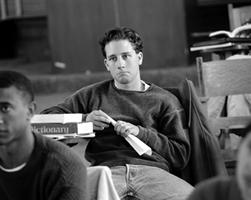 Just as the gods noticed the tears of Odysseus, we as adult leaders need to be aware of changes in our students’ behavior. Is a normally happy and upbeat girl now depressed and teary-eyed? Is a boy who is normally talkative suddenly quiet? Is an easygoing student becoming touchy and irritable? Granted, there could be many reasons for such a change, but pay attention to who it is they are spending time with.