
A few years ago, I had a thirteen-year-old student named Darcy. Darcy had faced a great deal of hardship in her young life. Her father wasn’t in the picture at all, and her mother worked three jobs just to make ends meet. Because her mother was never home, Darcy was essentially both mother and father to her two brothers, but her older brother had physically abused her, and her younger brother, though she loved him, needed more than she had to give. She had managed to get herself into quite a bit of trouble in school, by way of fights, shouting matches with teachers, and outbursts. Most likely, she had begun to agree with the voices that told her that she needed to be “tough” to survive, not to “take any crap” from anybody.
One day, I noticed tears streaming down Darcy’s face, and I approached her in the hallway in between classes to see if I could help. As Darcy stood by her locker weeping, I handed her a tissue and asked how things were going. Her eyes said it all. Apparently, Children and Youth Services had already contacted her mother, saying that if Darcy got into any more trouble at school, they would remove her from her home and place her with foster parents. And just that morning she had managed to get into an argument with another girl on the bus, and the girl had gone to the principal’s office and turned Darcy in for harassment.

As she tearfully told me what had happened, I suggested that she go down to the office and tell her side of the story to the principal. It was then that she said, “Mr. D, it won’t do any good. I’m the bad kid. Everybody in the school knows I’m the bad kid.” In other words, she had absorbed the message of the voices: “You’re a bad person.”
What the school community didn’t know about Darcy, and what Darcy probably didn’t even remember about herself, was that a week earlier, she had publicly complimented another student in my classroom. Jen, the student she had complimented, happened to be very shy and awkward. After Jen had given a presentation in front of the other students, I asked if anyone had any questions or comments. Darcy immediately thrust her hand into the air. “I think Jen did a great job! It was an interesting report.” I could immediately tell that Jen was beaming on the inside upon hearing those encouraging words from Darcy.
Sensing the despair that Darcy was now feeling, I was faced with a choice. Would I simply pat her on the back and say, “Well, I’m sure everything will work out”? Or would I fight on her behalf? I chose to fight. I challenged the voice that had been labeling her “the bad kid.” I immediately reminded her of the encouragement she had given Jen in the classroom, and what that meant to Jen. At this, she smiled a little. As adults, we must understand how powerful our words are. With our words, we have the power to both hurt and heal. I said, “You see, Darcy, there really is something good and alive inside you.”
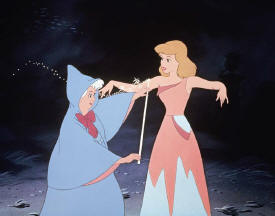
I didn’t stop there. Through the use of a story she had probably heard over and over since she was a little girl, I made an appeal to Darcy’s heart. I asked her if she was familiar with the tale of Cinderella. She was indeed. I went on to compare her life now—being forced into a position where she was essentially the caretaker for her brothers and her house—to that of Cinderella, who was forced to scrub and clean by a wicked stepmother and stepsisters. Remember, in the beginning of that story, Cinderella was viewed as a worthless ragamuffin by those around her, and her self-esteem, too, was nonexistent. Like Cinderella, what Darcy probably didn’t realize was that the way people viewed her was not even close to who she really was. It took someone else—her Fairy Godmother—to help Cinderella see who she really was beyond the rags.
When I spoke these words to Darcy, I noticed an ever so slight change in her demeanor. Hope, perhaps? Maybe she saw a little bit of her own story in the medieval tale of Cinderella. My hope is that maybe the thought crossed her mind that she, too, could rise above the opinions and condemnation of others. Stories help the truth sink down into the heart, past the filters of the head.
Labels: adolescence, adolescent, Cinderella, counseling, education, emotions, heart, mental health, mentor, myth, psychology, school, self esteem, story, students, teacher
 The Search for Truth

 If you had asked him what his interests and hobbies were, he probably wouldn’t have been able to tell you much. His heart was in pain, though on the outside it really wasn’t observable. One day, a new student arrived at his lunch table, bearing news of enticing lotus fruit. His name was Gordon, and he was what the teachers and administrators would refer to as a “problem child.” He was open about the fact that he frequently used marijuana and would share stories of being high with the others at the lunch table. Intrigued, Terry began spending more time around Gordon, eventually riding the bus to his house after school one day. It was there that Terry first experimented with pot. He and Gordon began riding their dirt bikes to the middle of the woods. There they would “light up” after school. His mother, in a haze of alcohol, would rarely say anything to Terry about not coming home from school until hours after it had already ended. He would spray down his clothes with deodorant to cover up the scent of the smoke.

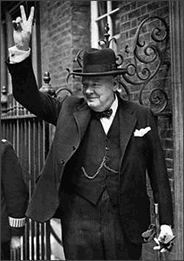 As adult leaders, we sometimes forget the influence we have over the young lives we encounter. Despite outward appearances and words to the contrary, they look to us for answers. A great deal of the angst we see in teens today reflects a frustration toward the world of adults for not providing any guidance or answers for their deep questions. They wonder if they will ever discover who they are and their place in the world. We are in a unique position to be Obi-Wan to those students for whom we have been given responsibility.
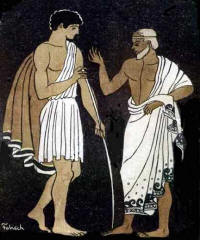
 This is the point in the story where the villain of our hearts often fires back with lies and distortions that can make us wonder why we ever hoped for anything better in the first place. Like Telemachus, we too have felt the wounds of our hearts begin to throb. The enemy of the prince’s heart began to whisper, “You’ve heard this all before and paid dearly for it! Your father may have had courage, yes, but look where he is now, at the bottom of the sea. The suitors are too many and too strong for you! Don’t be a fool!”
 Here is another great quote from Henri Nouwen:
 You will never be able to engage adolescents on more than just a surface level if you don’t spend time getting to know them. Often this starts simply by talking about hobbies, sports, movies, music, or whatever they may find of interest. People, in general, enjoy talking about subjects that interest them. Create opportunities for them to share their pursuits and passions in a way that is nonthreatening. A classroom or group setting may suit some students. There are many that would gladly spend hours discussing their zeal for snowboarding, clothes, or video games. However, there is also a multitude that would be reluctant to speak openly about their interests with other students present.
 Solitude is the garden for our hearts, which yearn for love. It is the place where our aloneness can bear fruit. It is the home for our restless bodies and anxious minds. Solitude, whether it is connected with a physical space or not, is essential for our spiritual lives. It is not an easy place to be, since we are so insecure and fearful that we are easily distracted by whatever promises immediate satisfaction. Solitude is not immediately satisfying, because in solitude we meet our demons, our addictions, our feelings of lust and anger, and our immense need for recognition and approval. But if we do not run away, we will meet there also the One who says, "Do not be afraid. I am with you, and I will guide you through the valley of darkness."
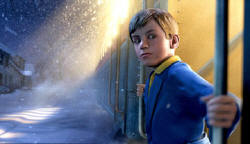 The Polar Express (Van Allsburg 1985) captures this choice that faces the young: to set out or to settle? The hero in the story, a young boy on the verge of adolescence, has awoken one Christmas Eve with a troubling question: Is the magic of Christmas gone? You see, he overheard his parents saying that this Christmas marked “the end of the magic.” Isn’t that a question that we have all asked at one point or another? Where is the magic? Life overwhelms us with schedules, deadlines, and responsibilities. Our hearts crave the magic we encountered when we were young.
 Awareness of the journey often begins when we are in a broken condition, when things are not going our way. Those broken times in our lives occur for just that purpose. They are a wake-up call. When a young person is faced with a painful trial, he is also faced with a choice—a choice between hope and despair. If he chooses despair, he will take one step further along the descending path of cynicism, unhealthy relationships, hesitation, and fear. If he chooses hope, he must acknowledge that there is something greater, that the story of his life has yet to fully unfold. This will take courage, no doubt about it, but as Goethe said, “Be bold, and mighty forces will come to your aid.”