A few years ago, I had a thirteen-year-old student named Darcy. Darcy had faced a great deal of hardship in her young life. Her father wasn’t in the picture at all, and her mother worked three jobs just to make ends meet. Because her mother was never home, Darcy was essentially both mother and father to her two brothers, but her older brother had physically abused her, and her younger brother, though she loved him, needed more than she had to give. She had managed to get herself into quite a bit of trouble in school, by way of fights, shouting matches with teachers, and outbursts. Most likely, she had begun to agree with the voices that told her that she needed to be “tough” to survive, not to “take any crap” from anybody.
One day, I noticed tears streaming down Darcy’s face, and I approached her in the hallway in between classes to see if I could help. As Darcy stood by her locker weeping, I handed her a tissue and asked how things were going. Her eyes said it all. Apparently, Children and Youth Services had already contacted her mother, saying that if Darcy got into any more trouble at school, they would remove her from her home and place her with foster parents. And just that morning she had managed to get into an argument with another girl on the bus, and the girl had gone to the principal’s office and turned Darcy in for harassment.

As she tearfully told me what had happened, I suggested that she go down to the office and tell her side of the story to the principal. It was then that she said, “Mr. D, it won’t do any good. I’m the bad kid. Everybody in the school knows I’m the bad kid.” In other words, she had absorbed the message of the voices: “You’re a bad person.”
What the school community didn’t know about Darcy, and what Darcy probably didn’t even remember about herself, was that a week earlier, she had publicly complimented another student in my classroom. Jen, the student she had complimented, happened to be very shy and awkward. After Jen had given a presentation in front of the other students, I asked if anyone had any questions or comments. Darcy immediately thrust her hand into the air. “I think Jen did a great job! It was an interesting report.” I could immediately tell that Jen was beaming on the inside upon hearing those encouraging words from Darcy.
Sensing the despair that Darcy was now feeling, I was faced with a choice. Would I simply pat her on the back and say, “Well, I’m sure everything will work out”? Or would I fight on her behalf? I chose to fight. I challenged the voice that had been labeling her “the bad kid.” I immediately reminded her of the encouragement she had given Jen in the classroom, and what that meant to Jen. At this, she smiled a little. As adults, we must understand how powerful our words are. With our words, we have the power to both hurt and heal. I said, “You see, Darcy, there really is something good and alive inside you.”
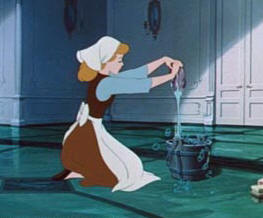
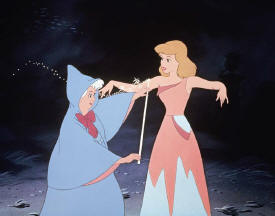
I didn’t stop there. Through the use of a story she had probably heard over and over since she was a little girl, I made an appeal to Darcy’s heart. I asked her if she was familiar with the tale of Cinderella. She was indeed. I went on to compare her life now—being forced into a position where she was essentially the caretaker for her brothers and her house—to that of Cinderella, who was forced to scrub and clean by a wicked stepmother and stepsisters. Remember, in the beginning of that story, Cinderella was viewed as a worthless ragamuffin by those around her, and her self-esteem, too, was nonexistent. Like Cinderella, what Darcy probably didn’t realize was that the way people viewed her was not even close to who she really was. It took someone else—her Fairy Godmother—to help Cinderella see who she really was beyond the rags.
When I spoke these words to Darcy, I noticed an ever so slight change in her demeanor. Hope, perhaps? Maybe she saw a little bit of her own story in the medieval tale of Cinderella. My hope is that maybe the thought crossed her mind that she, too, could rise above the opinions and condemnation of others. Stories help the truth sink down into the heart, past the filters of the head.
Labels: adolescence, adolescent, Cinderella, counseling, education, emotions, heart, mental health, mentor, myth, psychology, school, self esteem, story, students, teacher
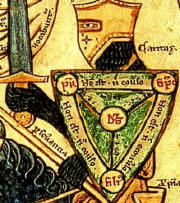 There is a craving deep inside each of us to understand where we came from. If we know the story of our heritage, our roots, then recognizing our own place in the world will be a little easier. Just as Telemachus sought out the truth about his father, so do today’s adolescents long to know the story of their families. Too many families in our day and age have no real connection to their pasts. Moving from city to city, state to state, and even country to country, more students are feeling the sense of being disconnected with their traditions and heritage.
 Meredith was a high school sophomore who went out for the summer league swim team. She was an incredibly hard worker who gave 110 percent to each workout. Her swim coach, Ms. Nida, liked Meredith right away and, as her coach, naturally wanted her to experience success in the pool. If we look deep enough into anyone’s eyes, we will see the smoke from a battle raging within. It was no different with this young lady. You see, Meredith had been labeled a “choker,” meaning that she swam well in practice, but when it came time to perform in a swim meet, she always seemed to come up short.
 Ms. Nida decided that this was the right time to intervene in Meredith’s story. The relay assignments would not be posted until the day of the swim meet, but she had a chance to speak with Meredith the prior to the race. She told her that she was so pleased with her work ethic in practice and that it was time for that effort to produce some results. Ms. Nida let her know that she had the “right stuff” to be a champion. These were words Meredith had heard before, but this time the coach went a step further. She gave her a quest, her own Gorgon to slay. Well, maybe not a literal monster, but a hobgoblin of the heart, which is no less terrifying. Ms. Nida told her that she had decided to give her the coveted anchor position on the girls’ 18-and-under relay.
 The blood drained from Meredith’s face. It was indeed a gift, but she didn’t see it as such . . . yet. The lies of the villain Meredith had believed about herself began to flow out of her mouth like water. “I’m a choker! The other girls will hate me if I don’t win it for them! I can’t do it!” But her coach simply said, “Meredith, I believe you can.”
 Did Meredith win in a close race allowing Lake Shore to prevail? No. This story didn’t end with a win. Quite the contrary, Kahkwa beat Lake Shore handily. However, a victory was secured that probably went undetected by most. Meredith swam her heart out! She didn’t choke. They didn’t win the race, but Meredith swam the fastest time of her life! People must have thought it strange that day to see Ms. Nida, the swim coach, jumping up and down with excitement on the pool deck as the team was losing to its rival. She was cheering for a team member who didn’t even win the blue ribbon!
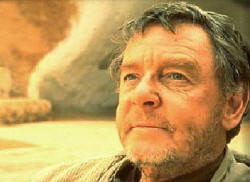 What can story teach us about this dilemma? Through the recent production of three prequel episodes—The Phantom Menace, Attack of the Clones, and Revenge of the Sith—a new generation is discovering the magic and wonder of Star Wars, a movie saga that began in 1977. Let’s take a closer look at that original episode, A New Hope, and mine it for wisdom that might pertain to the matter at hand.
  What stories have moved you? Did Jack’s ultimate sacrifice for Rose in James Cameron’s movie Titanic bring you to tears? Did you feel something stir in your heart when Braveheart’s William Wallace rallied the warriors of Scotland to fight against the tyranny of the English king? Reconnect with the stories, movies, tales, and fables have lifted you to a higher plane, even if only for a moment. Reread the books. Rent the movies. If you are moved by what you experience, odds are that there is a message there that the young people in your life desperately need to understand.
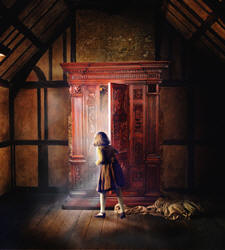 The child who chooses hope will begin to feel the restlessness of a traveler prior to a great adventure. He will begin to understand that maybe the opinions of others are not the final word on who he truly is. We need to prepare students for the moments when they will face these choices. It is crucial that we begin to teach them to see their circumstances through the light of myth and story. We have the opportunity to make them aware of the battle between hope and despair.
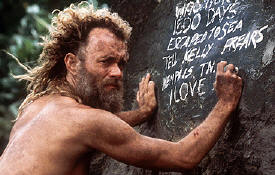 Awareness of the journey often begins when we are in a broken condition, when things are not going our way. Those broken times in our lives occur for just that purpose. They are a wake-up call. When a young person is faced with a painful trial, he is also faced with a choice—a choice between hope and despair. If he chooses despair, he will take one step further along the descending path of cynicism, unhealthy relationships, hesitation, and fear. If he chooses hope, he must acknowledge that there is something greater, that the story of his life has yet to fully unfold. This will take courage, no doubt about it, but as Goethe said, “Be bold, and mighty forces will come to your aid.”
 We have the opportunity to show students that life is a journey of mythical proportions. We need to let them know we understand that the hardships they face—even though they might seem trivial to us, with our longer experience—are very important and very real to them. We can show them how to view their challenges and trials as something greater, as smaller skirmishes in the cosmic battle between hope and despair. They long to know that they have an authentic and meaningful place in the story. The stories we loved as a child and that still touch us as adults hold the answers we seek.