Rethinking the Past
 There is a craving deep inside each of us to understand where we came from. If we know the story of our heritage, our roots, then recognizing our own place in the world will be a little easier. Just as Telemachus sought out the truth about his father, so do today’s adolescents long to know the story of their families. Too many families in our day and age have no real connection to their pasts. Moving from city to city, state to state, and even country to country, more students are feeling the sense of being disconnected with their traditions and heritage.
A few years ago, I assigned my students a family history project. I was amazed at how motivated these adolescents were when it came to studying the story of their families. There were some who managed to reconstruct their own family history, based on conversations with older relatives. This is an superb way to connect the vigor of the young with the wisdom and experience of the elderly!
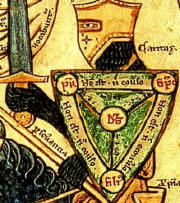
Students sat and listened to the stories of their grandparents, parents, aunts, and uncles. This helped many of the students to see themselves as a part of a continuum, an important piece of something much larger than themselves. The students were further instructed that they were to design their own family crest, a medieval shield bearing symbols, colors, or pictures of positive character traits that were important to their family. This was something concrete that they could take with them as a reminder of where they came from and the solid traditions that were a crucial part of their heritage. Even in the most dysfunctional families, we were able to draw out that which was good and worth passing on.
Labels: adolescents, crests, dysfunctional, elderly, family, grandparents, heritage, history, medieval, parents, relatives, shield, story, symbols, Telemachus, traditions, wisdom
posted by Jay D'Ambrosio at 5:03 AM
1 comments

 As adult leaders, we sometimes forget the influence we have over the young lives we encounter. Despite outward appearances and words to the contrary, they look to us for answers. A great deal of the angst we see in teens today reflects a frustration toward the world of adults for not providing any guidance or answers for their deep questions. They wonder if they will ever discover who they are and their place in the world. We are in a unique position to be Obi-Wan to those students for whom we have been given responsibility.
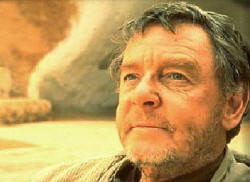 What can story teach us about this dilemma? Through the recent production of three prequel episodes—The Phantom Menace, Attack of the Clones, and Revenge of the Sith—a new generation is discovering the magic and wonder of Star Wars, a movie saga that began in 1977. Let’s take a closer look at that original episode, A New Hope, and mine it for wisdom that might pertain to the matter at hand.