Rethinking Gifts V
 The mythical pattern encourages us, as authority figures, not only to affirm and encourage the young with our words but also to present them with a concrete demonstration that we actually believe what we are saying about them. This is the gift. As Menelaus gave Telemachus a priceless silver bowl handcrafted by the gods and Obi-Wan gave Luke his father’s light saber, so too must we give a gift that expresses the reality of our words. What gifts do you have to give the students in your life? Oftentimes, the gift can be an opportunity, similar to the opportunity adult leaders gave to Manuel, Jordan, and Meredith. Other times, it can be a literal, physical present.
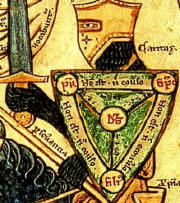
 I had the privilege of mentoring a young man, a high school senior, who had unfortunately managed to get into a great deal of trouble. His father was active in his life and wanted to be a part of the mentoring process whenever possible. As the boy made progress throughout the year and became accountable for his actions, his relationship with his father improved. Throughout his mentoring sessions, his father affirmed the good and noble characteristics that he observed in his son’s life. Though a frequently painful process, the young man began to make significant strides. Upon his graduation from high school, his father presented him with a gift that blew him away! He gave his son an actual sword, a real Scottish Claymore like the one William Wallace used in the movie Braveheart (1995). With this gift, the young man knew that his father actually believed that he could be trusted with something dangerous. He was trustworthy.
 When you consider this aspect of the mythical archetype, ask yourself some questions about a student you want to impact. What gift would provide the student with an understanding that your words have real meaning—that they are not empty? Can you arrange some opportunity for this young person that would communicate your trust in her or allow her to realize the strength she doesn’t believe she possesses?
Labels: Braveheart, gifts, mentoring, mythical, Obi-Wan, Telemachus, William Wallace
posted by Jay D'Ambrosio at 5:20 AM
0 comments

 There is a craving deep inside each of us to understand where we came from. If we know the story of our heritage, our roots, then recognizing our own place in the world will be a little easier. Just as Telemachus sought out the truth about his father, so do today’s adolescents long to know the story of their families. Too many families in our day and age have no real connection to their pasts. Moving from city to city, state to state, and even country to country, more students are feeling the sense of being disconnected with their traditions and heritage.
 Menelaus bequeathed a royal silver bowl to Telemachus, endorsing the young prince as the rightful heir of Odysseus; likewise, Obi-Wan gave Luke his father’s light saber, the weapon of the Jedi. What else was he giving Luke through the gift of a powerful weapon? What was the unspoken message? Obi-Wan was letting him know that, as the son of a Jedi, Luke had what it takes to wield such an implement. He was also extending his trust. He trusted that Luke would use the weapon for good and not evil. What did Menelaus really give Telemachus? It was nothing less than a potent symbolic declaration that young man was worthy of royal authority. What powerful statements—and this time without words!
 As adult leaders, we sometimes forget the influence we have over the young lives we encounter. Despite outward appearances and words to the contrary, they look to us for answers. A great deal of the angst we see in teens today reflects a frustration toward the world of adults for not providing any guidance or answers for their deep questions. They wonder if they will ever discover who they are and their place in the world. We are in a unique position to be Obi-Wan to those students for whom we have been given responsibility.
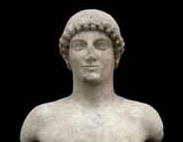 As a parting gift, King Menelaus presented Telemachus with a precious silver bowl, fashioned by the gods themselves. Menelaus informed the prince that another mighty ruler had given him this gift, and that now it was being passed down to Telemachus. This action by Menelaus was very critical to the formation of Telemachus’s identity. Here was an older and wiser individual handing down a precious gift to a younger one. He entrusted Telemachus with something valuable. The unspoken message was that Telemachus was trustworthy. He was capable of keeping valuable treasures. He mattered.
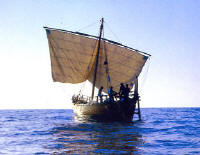 This is the point in the story where the villain of our hearts often fires back with lies and distortions that can make us wonder why we ever hoped for anything better in the first place. Like Telemachus, we too have felt the wounds of our hearts begin to throb. The enemy of the prince’s heart began to whisper, “You’ve heard this all before and paid dearly for it! Your father may have had courage, yes, but look where he is now, at the bottom of the sea. The suitors are too many and too strong for you! Don’t be a fool!”
 Upon being granted an audience with Menelaus, Telemachus concealed his true identity as prince of Ithaca, while the king remembered old battles and the fall of Troy. The Spartan monarch revealed the heroism and valor of Odysseus—and what he believed to be the fate of Odysseus, declaring his belief that the clever hero rested at the bottom of Poseidon’s sea. However, Menelaus did not stop there. What he did next proved to be crucial to the heart and soul of the young Telemachus. Menelaus correctly ascertained the identity of this mysterious visitor to his court and acknowledged that he saw a strong resemblance between Telemachus and his father.
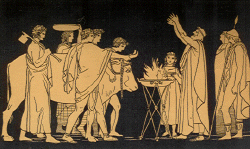 Telemachus bore a heavy burden. His father was rumored to have been lost at sea following the war at Troy, and men from his own town had invaded his home, demanding the hand of his lonely mother in marriage. This young man was the son of a king—and not just any king, mind you, but the legendary Odysseus. Despite being raised as royalty, daily being hailed as “Prince Telemachus,” this young man felt powerless in the face of the older suitors who had aggressively pushed their way into his home.
 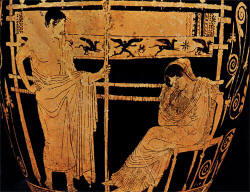 As do we all, the students we work with possess a strong urge to belong. When they enter middle school, many adolescents feel lost almost isolated from all that is familiar. For good or ill, most will desperately seek out peer groups from which they can derive a sense of identity. Homer describes such a longing to discover one’s true identity in the person of Odysseus’s son, Telemachus.