Rethinking Belonging II
 There is nothing inherently wrong with peer groups or cliques. They are common to every middle and high school, typically based on friendships and mutual interests. However, they do have the potential to twist and mold an adolescent into their own image. The coming-of-age movie The Breakfast Club (1985) illustrates this state of affairs in an entertaining yet poignant way. The entire movie takes place in a Saturday detention hall in a suburban Chicago high school. Represented is one member of each social group in the school.
As each student strolls into the detention hall, the air is thick with posturing and posing. The camera pans over the five students, and you can see that each bears the emblems of their social group—buttons, sport shirts, jeans jackets, eye makeup, pocket protectors. Slowly, they are pushed by one another out of their comfort zones and forced to be real about who they really are on the inside. If you can look past the strong language, this film provides a great study on the concept of the formation of identity. Think about this for a moment. You were probably a member of at least one clique during your school years. What often acts as the glue or the bond that keeps these peer groups together? It is fear, plain and simple—the fear of being left out, of being different, of being nobody.
Labels: belonging, Breakfast Club, cliques, fear, friendship, high school, middle school, movies, peer pressure, social groups
posted by Jay D'Ambrosio at 9:17 AM
0 comments

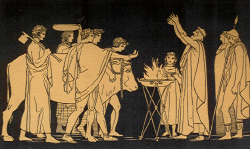 Telemachus bore a heavy burden. His father was rumored to have been lost at sea following the war at Troy, and men from his own town had invaded his home, demanding the hand of his lonely mother in marriage. This young man was the son of a king—and not just any king, mind you, but the legendary Odysseus. Despite being raised as royalty, daily being hailed as “Prince Telemachus,” this young man felt powerless in the face of the older suitors who had aggressively pushed their way into his home.
 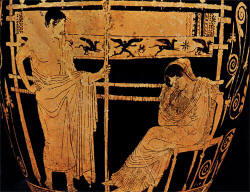 As do we all, the students we work with possess a strong urge to belong. When they enter middle school, many adolescents feel lost almost isolated from all that is familiar. For good or ill, most will desperately seek out peer groups from which they can derive a sense of identity. Homer describes such a longing to discover one’s true identity in the person of Odysseus’s son, Telemachus.
 The young people that we work with crave a sense of belonging to something bigger than themselves. Politicians, too, have discovered this longing within their young constituents. In a speech delivered during the 2000 presidential election season, Senator John McCain of Arizona urged young people to remember the sacrifices of the past: