Rethinking Why We Fight
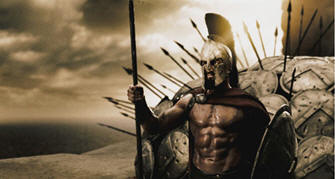 I just returned from watching the movie 300. The visuals were stunning and the violence, graphic. For those of you who know your history, you remember that in 480 B.C. the Persian king, Xerxes, set out with tens upon thousands of troops to conquer the free city-states of Greece, including Athens and Sparta. Three hundred Spartans, under the command of Leonidas, stood in the gap between the Persian hordes and the unprepared Greek peoples. Resisting wave after wave of Persian onslaught, the Spartans held the narrow pass of Thermopylae for days, allowing the rest of Greece to prepare for battle. They were ultimately defeated, by an act of betrayal, but their valiant stand enabled the Athenian navy to defeat the Persian fleet at Salamis.
 If the Persians had conquered Greece, Western Civilization may have been wiped out in its infancy. Did the Spartans understand this while bravely standing in the gap for their countrymen? Probably not. Rather, they what they knew to be the right thing at the right time.
Sometimes our battle for the young people in our lives seems overwhelming and the assaults seem to be unrelenting. Sometimes we feel betrayed. But standing in the gap for the young against the forces that would tear them apart is always the right thing to do. Looking back with some perspective, we may be able to see how our fight has influenced lives and changed destinies. Then again, we may not be able to see all ends. The important thing is to do what your heart tells you is right at the right moment. In the end, that makes all the difference.
"Our arrows will blot out the sun." - the Persians
"So much the better, we shall fight in the shade." - Dienekes, Spartan Soldier
Labels: 300, Athens, battle, fight, Greeks, Leonidas, Persians, Salamis, Sparta, Spartans, Thermopylae, Xerxes
posted by Jay D'Ambrosio at 7:18 PM
0 comments

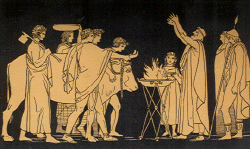 Telemachus bore a heavy burden. His father was rumored to have been lost at sea following the war at Troy, and men from his own town had invaded his home, demanding the hand of his lonely mother in marriage. This young man was the son of a king—and not just any king, mind you, but the legendary Odysseus. Despite being raised as royalty, daily being hailed as “Prince Telemachus,” this young man felt powerless in the face of the older suitors who had aggressively pushed their way into his home.