Rethinking Identity
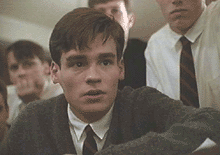 If you don’t have a solid sense of who you are and where you come from, you will be more vulnerable to the pressures of fitting into one particular group or another. Do you know any adults who still have not discovered their place in the world? Do they still fall prey to the pressures of “grown-up” social groups? Do you know any adults who pressure their children to be popular or to participate in a certain activity due to their own insecurities and lack of identity?
Go to a youth sporting event and simply observe the parents in the stands. How many of them are trying to find validation? How many are searching for some sort of idea about who they are through their children’s success, or by refusing to allow them to fail? How many news reports have we heard about parents who start fights in the stands and act in an outrageous manner toward coaches in such situations?
We can help the students in our sphere of influence move beyond the fear of nonconformity and onto the path of discovering what is true and noble about their heritage. If this battle for the self can be faced and overcome in adolescence, then a healthy transition into adulthood can begin.
Labels: adults, battle, coaches, Dead Poets Society, identity, parents, peers, popularity, self, social groups, sports, youth
posted by Jay D'Ambrosio at 12:26 PM
0 comments

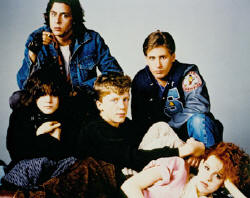 There is nothing inherently wrong with peer groups or cliques. They are common to every middle and high school, typically based on friendships and mutual interests. However, they do have the potential to twist and mold an adolescent into their own image. The coming-of-age movie The Breakfast Club (1985) illustrates this state of affairs in an entertaining yet poignant way. The entire movie takes place in a Saturday detention hall in a suburban Chicago high school. Represented is one member of each social group in the school.