Rethinking Gifts V
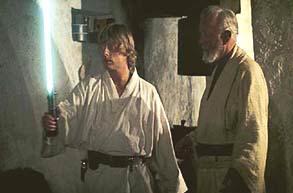 The mythical pattern encourages us, as authority figures, not only to affirm and encourage the young with our words but also to present them with a concrete demonstration that we actually believe what we are saying about them. This is the gift. As Menelaus gave Telemachus a priceless silver bowl handcrafted by the gods and Obi-Wan gave Luke his father’s light saber, so too must we give a gift that expresses the reality of our words. What gifts do you have to give the students in your life? Oftentimes, the gift can be an opportunity, similar to the opportunity adult leaders gave to Manuel, Jordan, and Meredith. Other times, it can be a literal, physical present.
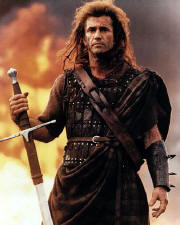 I had the privilege of mentoring a young man, a high school senior, who had unfortunately managed to get into a great deal of trouble. His father was active in his life and wanted to be a part of the mentoring process whenever possible. As the boy made progress throughout the year and became accountable for his actions, his relationship with his father improved. Throughout his mentoring sessions, his father affirmed the good and noble characteristics that he observed in his son’s life. Though a frequently painful process, the young man began to make significant strides. Upon his graduation from high school, his father presented him with a gift that blew him away! He gave his son an actual sword, a real Scottish Claymore like the one William Wallace used in the movie Braveheart (1995). With this gift, the young man knew that his father actually believed that he could be trusted with something dangerous. He was trustworthy.
When you consider this aspect of the mythical archetype, ask yourself some questions about a student you want to impact. What gift would provide the student with an understanding that your words have real meaning—that they are not empty? Can you arrange some opportunity for this young person that would communicate your trust in her or allow her to realize the strength she doesn’t believe she possesses?
Labels: Braveheart, gifts, mentoring, mythical, Obi-Wan, Telemachus, William Wallace
posted by Jay D'Ambrosio at 5:20 AM
0 comments

 Adolescents will often begin to see the things that we identify in them. If we point out a liar, a thief, a failure, or a drain on society, they will tend to follow that lead and begin to believe those things about themselves. On the other hand, if you see an adolescent who has the potential to be an honest person, someone who is capable of being trustworthy, or one who could possibly make a significant contribution to the world—and you tell them about it—they are much more likely to see those good characteristics in themselves. Someone once said that the word potential simply means “they haven’t done it yet.” In a sense, that’s true. That is why it is important to follow the mythical pattern we’ve been examining. A gift or task always follows the affirmation. Give students an opportunity to work out that potential in their own lives. Tremendous things have humble beginnings. It is a reoccurring theme in the cosmos. Remember the Big Bang!
 Meredith was a high school sophomore who went out for the summer league swim team. She was an incredibly hard worker who gave 110 percent to each workout. Her swim coach, Ms. Nida, liked Meredith right away and, as her coach, naturally wanted her to experience success in the pool. If we look deep enough into anyone’s eyes, we will see the smoke from a battle raging within. It was no different with this young lady. You see, Meredith had been labeled a “choker,” meaning that she swam well in practice, but when it came time to perform in a swim meet, she always seemed to come up short.
 Ms. Nida decided that this was the right time to intervene in Meredith’s story. The relay assignments would not be posted until the day of the swim meet, but she had a chance to speak with Meredith the prior to the race. She told her that she was so pleased with her work ethic in practice and that it was time for that effort to produce some results. Ms. Nida let her know that she had the “right stuff” to be a champion. These were words Meredith had heard before, but this time the coach went a step further. She gave her a quest, her own Gorgon to slay. Well, maybe not a literal monster, but a hobgoblin of the heart, which is no less terrifying. Ms. Nida told her that she had decided to give her the coveted anchor position on the girls’ 18-and-under relay.
 The blood drained from Meredith’s face. It was indeed a gift, but she didn’t see it as such . . . yet. The lies of the villain Meredith had believed about herself began to flow out of her mouth like water. “I’m a choker! The other girls will hate me if I don’t win it for them! I can’t do it!” But her coach simply said, “Meredith, I believe you can.”
 Did Meredith win in a close race allowing Lake Shore to prevail? No. This story didn’t end with a win. Quite the contrary, Kahkwa beat Lake Shore handily. However, a victory was secured that probably went undetected by most. Meredith swam her heart out! She didn’t choke. They didn’t win the race, but Meredith swam the fastest time of her life! People must have thought it strange that day to see Ms. Nida, the swim coach, jumping up and down with excitement on the pool deck as the team was losing to its rival. She was cheering for a team member who didn’t even win the blue ribbon!
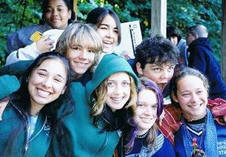 A few years earlier, a youth worker named Siofra had had the opportunity to come in contact with a young lady who was going into her junior year of high school. She was attending a camp known as the Gateway Teen Institute, where Siofra was working as a summer counselor. The girl’s name was Jordan, and Siofra could tell from her actions that she would rather have been invisible. She was quiet, the sort of kid that tends to fly under the radar, the kind that adult leaders often overlook.
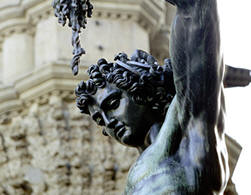 The Greek hero Perseus was sent into exile as a child by his fearful grandfather who was told by an oracle that his grandson would one day bring an end to his rule. He and his mother Danae were locked in a wooden chest and set adrift on the sea until one day they landed on the shores of the island of Seriphos. The young hero grew up on this island with no real idea of his place in the world. He was lost. He doubted himself and his ability to face the serious challenges of life.
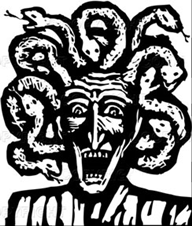 One day, the king of the island, Polydectes, demanded tribute from Perseus and his mother, a tribute that neither could afford to pay. Perseus pleaded with the king, saying that he had nothing to offer but his service. The king, seizing the opportunity, assigned to Perseus what seemed to be an impossible task: he wanted the head of the fearsome Gorgon Medusa. The Gorgons were creatures, loathed by gods and men, whose hair was comprised of venomous snakes. They possessed the chilling ability to turn those that gazed upon her hideous faces into stone.
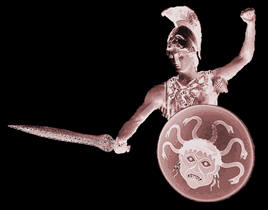 Demonstrating her faith in the young hero in a way that was very concrete, Athena gave him her very own shield, a reflective shield that would allow him to see Medusa without gazing directly at her. She further directed him where to acquire the other tools he would need to complete his quest, including a sword, a helmet of invisibility, winged sandals, and a magical bag. The young hero went forth, knowing that a goddess believed that there was something in him that was capable of accomplishing great deeds. He also carried with him the physical representation of Athena’s belief in him, the shield, sword, and other implements necessary to achieve his goal.
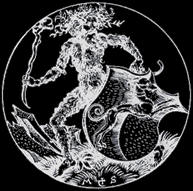 An old German folktale, “Iron Hans,” tells of a wild man who spirits a young prince away from his palace to the wilderness. There he affirms the young man’s innate strength and courage. Demonstrating his confidence in the youth, the wild man eventually gives him command of a mighty army with which he is able to defend a kingdom from invasion!
 In the 1984 movie The Karate Kid, Mr. Miyagi repairs Daniel LaRusso’s bicycle after a brutal assault on Daniel by a gang of bullies, letting him know that he matters. He then goes on to teach him the dangerous art of karate, letting him know that he trusts him to use it in a way that will not seek to harm others. The final gift he then presents Daniel blows him away! Mr. Miyagi handed him the keys to a beautiful yellow, classic car on his sixteenth birthday. This demonstrates that the older Miyagi has respect for and trusts the younger LaRusso to handle the responsibility wisely. Miyagi quietly but firmly delivers blows to the enemy who would crush his young pupil's heart.
 Menelaus bequeathed a royal silver bowl to Telemachus, endorsing the young prince as the rightful heir of Odysseus; likewise, Obi-Wan gave Luke his father’s light saber, the weapon of the Jedi. What else was he giving Luke through the gift of a powerful weapon? What was the unspoken message? Obi-Wan was letting him know that, as the son of a Jedi, Luke had what it takes to wield such an implement. He was also extending his trust. He trusted that Luke would use the weapon for good and not evil. What did Menelaus really give Telemachus? It was nothing less than a potent symbolic declaration that young man was worthy of royal authority. What powerful statements—and this time without words!
 Left to their own devices, students often cannot see the good in themselves or in their families. Sometimes there is a tendency to focus on the negative. Students, when challenged, will often declare what they are not, instead of responding with who they are. Isn’t there a little bit of that in all of us? When a daunting challenge comes our way, do we meet it eagerly, with the anticipation of being able to use our gifts and talents to overcome the obstacle? Or do we start to doubt our abilities and say things like, “I don’t have the strength for this” or “I just can’t do it”? This has probably been the norm since you were young. See how the enemy starts its assault early in a person’s life?
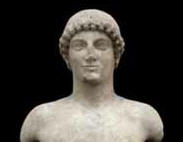 As a parting gift, King Menelaus presented Telemachus with a precious silver bowl, fashioned by the gods themselves. Menelaus informed the prince that another mighty ruler had given him this gift, and that now it was being passed down to Telemachus. This action by Menelaus was very critical to the formation of Telemachus’s identity. Here was an older and wiser individual handing down a precious gift to a younger one. He entrusted Telemachus with something valuable. The unspoken message was that Telemachus was trustworthy. He was capable of keeping valuable treasures. He mattered.