Rethinking Gifts III
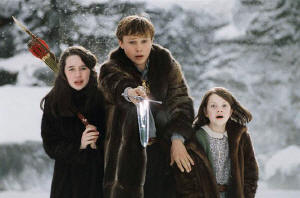 Do we see this pattern in other stories—a mentor or authority figure callings out the good, strong, and virtuous qualities of a younger individual, then reinforcing this new identity through a meaningful gift? Absolutely! C. S. Lewis’s beloved book The Lion, the Witch, and the Wardrobe (1950) portrays this pattern beautifully. When the four Pevensie children find themselves in the magical realm of Narnia, they are confronted with the deadly reality that this amazing land is suffering under the wintry spell of the White Witch. There is a war brewing between the forces of light and darkness, good and evil.
The two boys and two girls are hunted by the evil servants of the witch, and with the help of the talking woodland creatures flee to meet Aslan, the mighty Lion, King of the Wood. Upon encountering Aslan, the children are filled with awe and terror at his striking majesty. But does this mighty lion pounce upon the frightened children, devouring them in a single gulp? Not at all! Instead he does something rather surprising. He announces their true identities, as the rightful kings and queens of all Narnia.
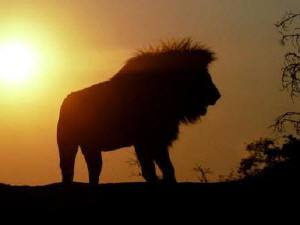 Further following the pattern we’ve observed in other stories, the great Lion goes on to bestow unique gifts upon each of the children. To Lucy, the younger girl, he gives a magical, healing cordial. This gift affirms a wonderful quality in this young girl, that she is a healer at heart; she has a deep desire to help others in need. Aslan then gifts Susan, the older girl, with a powerful horn that will summon help whenever help is most needed. You see, Susan often struggled with self-image and longed to know that she was worth rescuing, worth fighting for. Finally, to the boys, Peter and Edmund, Aslan gives swords and shields. These are dangerous weapons in the hands of children, and weapons can be used for either great good or great evil. In human history, with weapons the Afghans were liberated from the tyranny of the Taliban, and with weapons the Mongols exacted their terrible toll upon the continent of Asia. The outcome depends upon who wields the weapons. Even though Peter and Edmund felt frightened by the war that was threatening to engulf them, Aslan saw what the boys were on the inside: fierce warriors who would defend the side of good with passion and heart. Knowing that someone who was wise, good, and powerful believed in them made all the difference in the world!
Labels: Aslan, C.S. Lewis, Edmund, fierce, frightened, good, lion, Lucy, magical, mentor, Mongols, Narnia, Peter, powerful, spell, Susan, Taliban, Wardrobe, warriors, Witch King
posted by Jay D'Ambrosio at 2:39 PM
0 comments

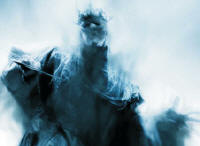 One night, after we had put our son to bed, my wife and I watched the movie The Lord of the Rings: The Fellowship of the Ring (2001). I have always been a strong admirer of J. R. R. Tolkien, due to the universal messages of truth that can be found throughout his works, and as I watched the scene in the movie where the Lord of the Nazgul stabbed the young hobbit Frodo, I began to feel as if I needed to pay close attention. In the scene, Sam, Merry, Pippin, and Aragorn watch helplessly as Frodo slips further and further into unconsciousness and toward death.
 some of the trials that befell us during those school years would be things that we wish we could forget. Let’s face it, growing up is hard! We have all seen our share of heartache, harassment, the loss friendship, isolation, divorce, death, humiliation, and pressure—if not in our own story, then at least in the stories of our friends and loved ones. Some try to shrug it off, saying that this is all just a part of adolescence, and that the kids will “get over it.” But many of you have witnessed these ordeals firsthand . . . and many have never gotten over it. The wounds they have endured in those years of life have stayed with them, like a cancer on the soul. One man I was mentoring finally confessed to me after several months that the tormenting he endured in eighth grade at the hands of a few bullies has played a huge part in his current struggle with anger issues.